A complete outdoor living area does not always have to be built in one stage. If you want a paver patio now and a cooking area or other permanent feature later, bring the full wish list to the first estimate. The useful question is not simply what can wait, but what decisions should be made before the first paving goes down.
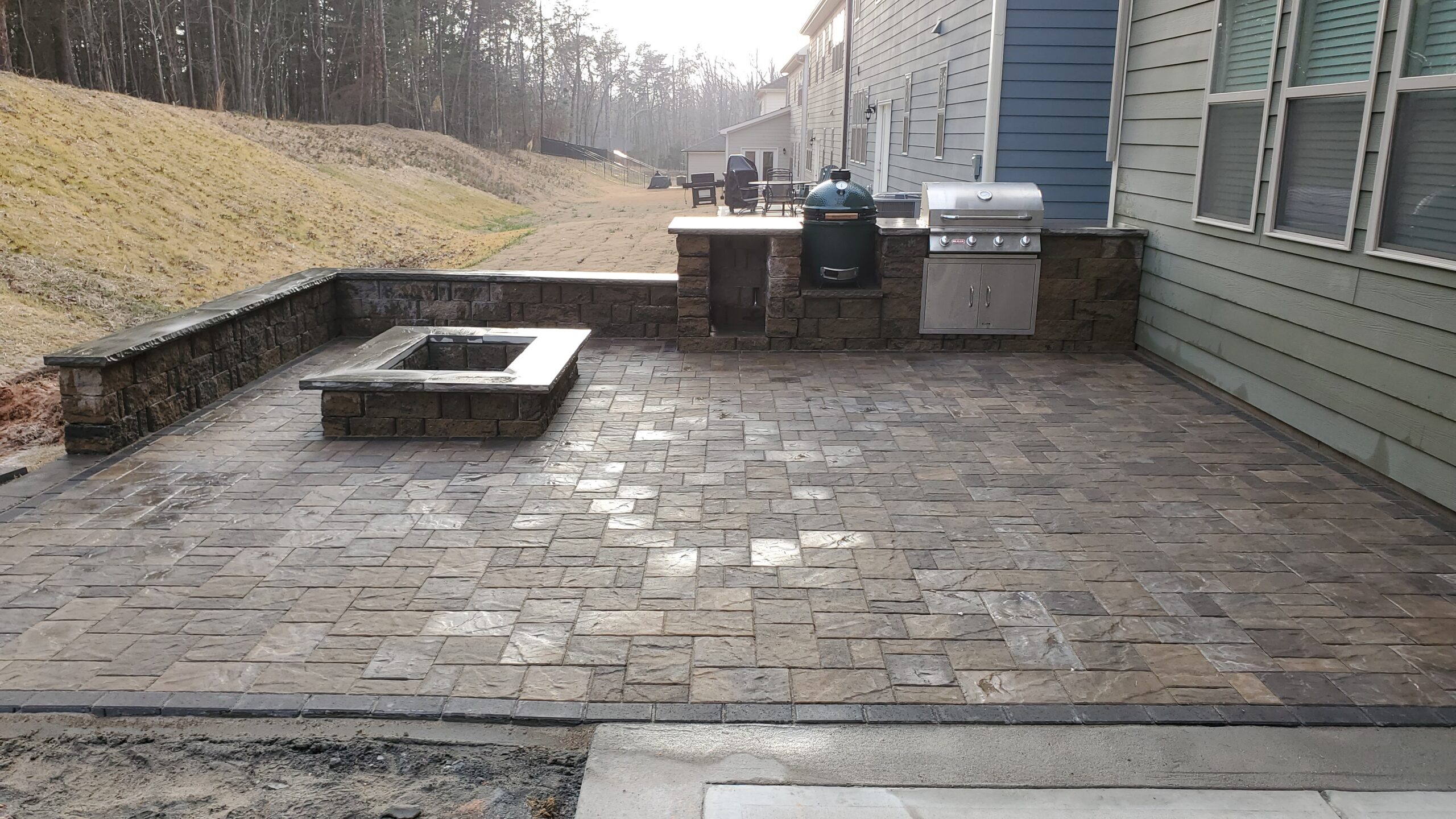
The P&J project photo above shows several features sharing one paved space: a built-in cooking area, a square block fire feature and a low wall. It is an example of how features relate within a layout, not a claim that this particular project was built in phases.
Separate today’s needs from future possibilities
Write two short lists. The first should describe what would make the yard useful now, such as space for a table and chairs or a comfortable connection to the back door. The second can include future ideas, such as a built-in grill area or additional seating. Mark which future features are firm plans and which are only possibilities.
This helps avoid reserving a large part of the patio for something you may never build. It also gives the estimate conversation a practical starting point: a usable first phase with a clear reason for each later addition.
Agree on the overall layout first
Ask how the first phase will fit the eventual shape of the space. Consider doors, walking routes, furniture and the footprint of any permanent features. A future cooking area may affect where people sit and how they move between the house and patio. Review actual equipment dimensions and installation instructions before treating its location as settled.
Discuss changes in ground level and water flow as part of the whole plan. On a sloping property, a retaining wall or steps may affect the sequence of work. The appropriate order depends on the site; a sketch alone does not establish what needs to be built first.
Ask what later work would disturb
Before choosing the first phase, ask where crews and equipment would enter for the next one. Would materials need to cross finished paving? Would a future feature require lifting pavers or changing an edge? If a later addition might need utilities, discuss the requirements with the appropriate qualified professionals before deciding how to prepare for it.
The aim is to identify avoidable rework, not to assume every future expense can be eliminated. Sometimes completing related work together makes more sense. Sometimes a smaller first phase is the better fit for the homeowner’s priorities.
Keep a record of the first phase
Save the agreed plan, photographs, product names and color information with the project paperwork. Ask about the practicality of matching materials later. Do not assume a future batch will look identical to paving that has already weathered outdoors. A deliberate border or change in pattern may be worth discussing if a later extension is likely.
Define what each estimate includes
Ask for the proposed first phase to be clearly described, including its finished edges and how the space will function before future additions. Separate current work from optional or future work. Future pricing and availability should be discussed when that work is ready to proceed, rather than treated as guaranteed by today’s plan.
P&J Outdoor Creations LLC is based in Mocksville and serves Winston-Salem and nearby communities. Explore our paver patio services, gather your priorities with our estimate preparation guide, and request a free estimate. You can also call 704-738-8064 to discuss your outdoor project.